The Purple Heart Medal…
The government awards the Purple Heart Medal for those wounded or killed in battle, and yet there is no recognition for the military/veterans who have suffered or died of their initially invisible wounds from toxic exposures in combat. War has changed since George Washington initiated the Badge of Military Merit in 1782, which in 1932 became the Purple Heart. It is time to modernize the recognition of combat wounds to include the toxic wounds of war.
The US Congress has signed the PACT Act (Promise to Address Comprehensive Toxics Act of 2022) (Public Law 117-168) into law, establishing the Cost of War Toxic Exposures Fund in the support of health care, research, and related benefits and activities. The US Department of Veterans Affairs reviews connections of service-related Toxic Exposure Risk Activity (TERA) with formal medical diagnoses to determine service connection.
However, this support still lacks the recognition our military members deserve. Please…consider reading and signing the petition to urge our government to modernize the recognition of these toxic exposure combat wounds.”
Thank you.
About
the Purple Heart
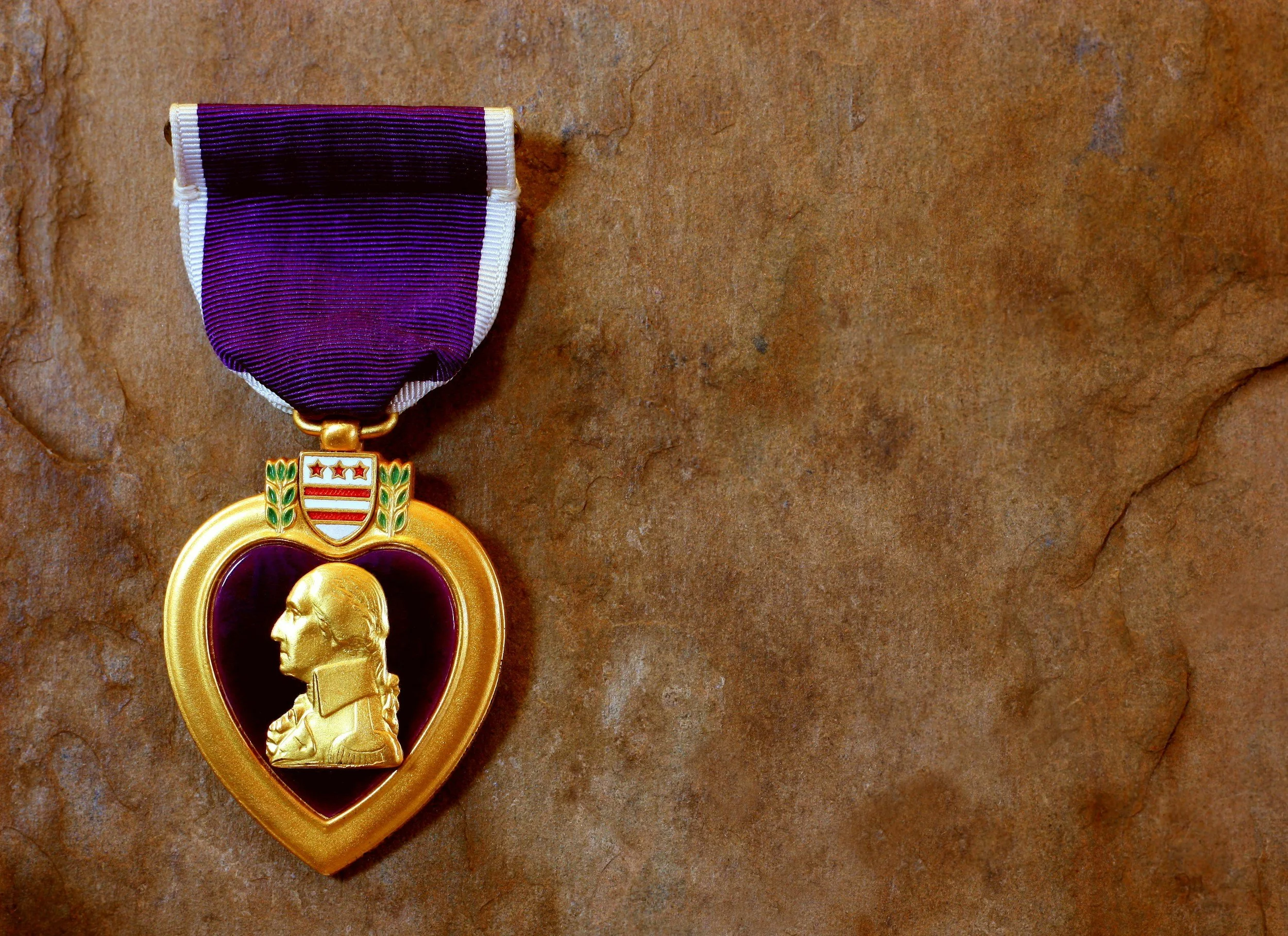
President George Washington initiated the Badge of Military Merit on August 7, 1782, awarded for “any singularly meritorious action.” During World War I it was awarded to service members wounded or killed in action. In 1932 the Badge of Military Merit was revised by General Douglas MacArthur, Army Chief of Staff, in honor of President George Washington’s bicentennial birthday. The heart-shaped, gold-colored medal bears Washington’s image and coat of arms with a background of purple symbolizing courage and sacrifice. "FOR MILITARY MERIT" is inscribed on the back.
President Franklin D. Roosevelt expanded the Purple Heart to all military branches in 1942, including Marine Corps, Navy, and Coast Guard, and granted posthumous awards for those killed in action on or before December 7, 1941, the Pearl Harbor attack. President Harry Truman later extended eligibility back to April 5, 1917.
The Military Order of the Purple Heart (MOPH) was created in 1932 to recognize combat-wounded veterans. In 1957, the Military Order of the Purple Heart Foundation (Purple Heart Foundation) was developed as a non-profit organization dedicated to funding services for our nation's veterans. These organizations are not available for all those wounded by modern warfare.
The Purple Heart is considered the award “no one wants.” Yet in modern warfare, many injuries go unrecognized because they are invisible — not appearing for years, yet causing disease, disability, and death. Military members harmed in combat by chemical, biological, and toxic exposures deserve the same honor as those wounded or killed in direct combat. Please consider signing the petition to justly recognize all those suffering war injuries.
References
Congressional Budget Office (CBO). (2023, March). Legislation enacted in the Second Session of the 117th Congress that affects mandatory spending or revenues. https://www.cbo.gov/publication/58999
Congressional Research Service. (2024, October 2). The Purple Heart: Background and issues for Congress (Report No. R42704). https://www.congress.gov/crs-product/R42704
DeSimone, D. (2025, August 4). 9 things you need to know about the Purple Heart medal. United Service Organizations. https://www.uso.org/stories/2276-8-purple-heart-facts
History.com Editors. (2018, December 3). The Navy disaster that earned JFK two medals for heroism. History.com. https://www.history.com/articles/jfk-wwii-purple-heart-torpedo-boat
Schick, J. (2021, August 6). The history of the Purple Heart. The National WWII Museum. https://www.nationalww2museum.org/war/articles/history-of-the-purple-heart
The White House. (2025, August 7). National Purple Heart Day, 2025: A proclamation by the president of the United States of America. https://www.whitehouse.gov/briefings-statements/2025/08/national-purple-heart-day-2025/
U.S. Army. (2025, July 28). Purple Heart. Human Resources Command. https://www.hrc.army.mil/content/Purple%20Heart
U.S. Department of Veterans Affairs. (2025, August 8). Exposure to hazardous chemicals and materials. https://www.va.gov/disability/eligibility/hazardous-materials-exposure/
U.S. Department of Veterans Affairs. (2025, April 21). The PACT Act and your VA benefits. https://www.va.gov/resources/the-pact-act-and-your-va-benefits/
Veterans of Foreign Wars (VFW). (2025). PACT Act and toxic exposure information. https://www.vfw.org/advocacy/pact-act-and-toxic-exposure-information
Created: 10/16/2025
Updated: 02/18/2026